Rules
A rule combines a trigger (the condition) and an action (what happens when the condition matches). Each rule is independent and you can turn it on or off, edit, delete, or tag it. Rule types:Pre-built Rules
None Intent
Prevents false positives during intent identification. Trains the system to distinguish valid intents from ambiguous or incorrect ones. This rule is enabled by default and can’t be disabled or deleted. You can add utterances to improve accuracy. To add None Intent utterances:- Go to AgentAssist > Experience > Agent Coaching.
-
Select Edit on the None Intent pre-built rule.
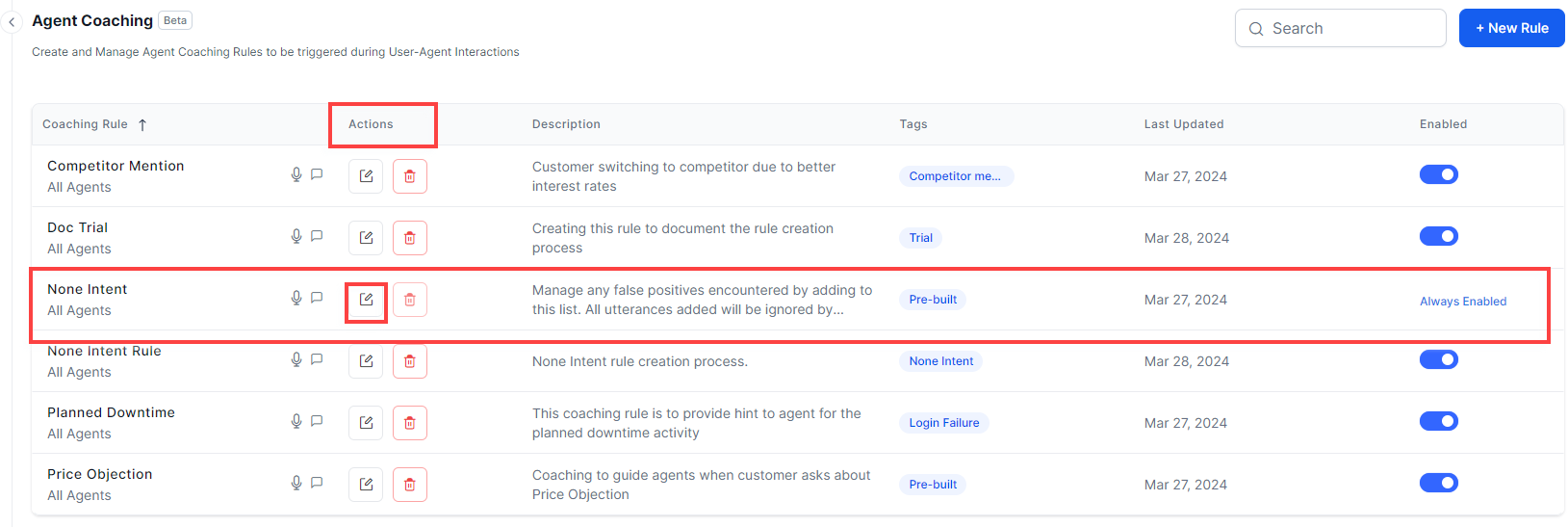
- Select Add Utterance(s).
- Choose an input method:
To use AI Assist, enable OpenAI in App Settings > Generative AI Tools and enable Generating Opposite… in the Co-Pilots section.
- Select AI Assist.
-
Select rules from the Add Rules list and select Add.
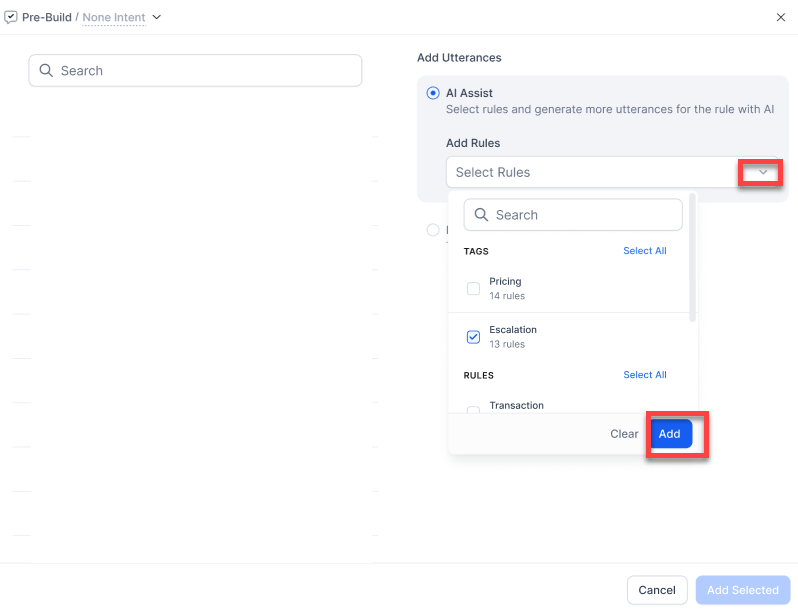
- The AI generates similar utterances. Select the ones you want.
- Select Add Selected, then Save.
- Select Input Utterances Manually.
-
Enter an utterance in the Utterances field and press Enter.
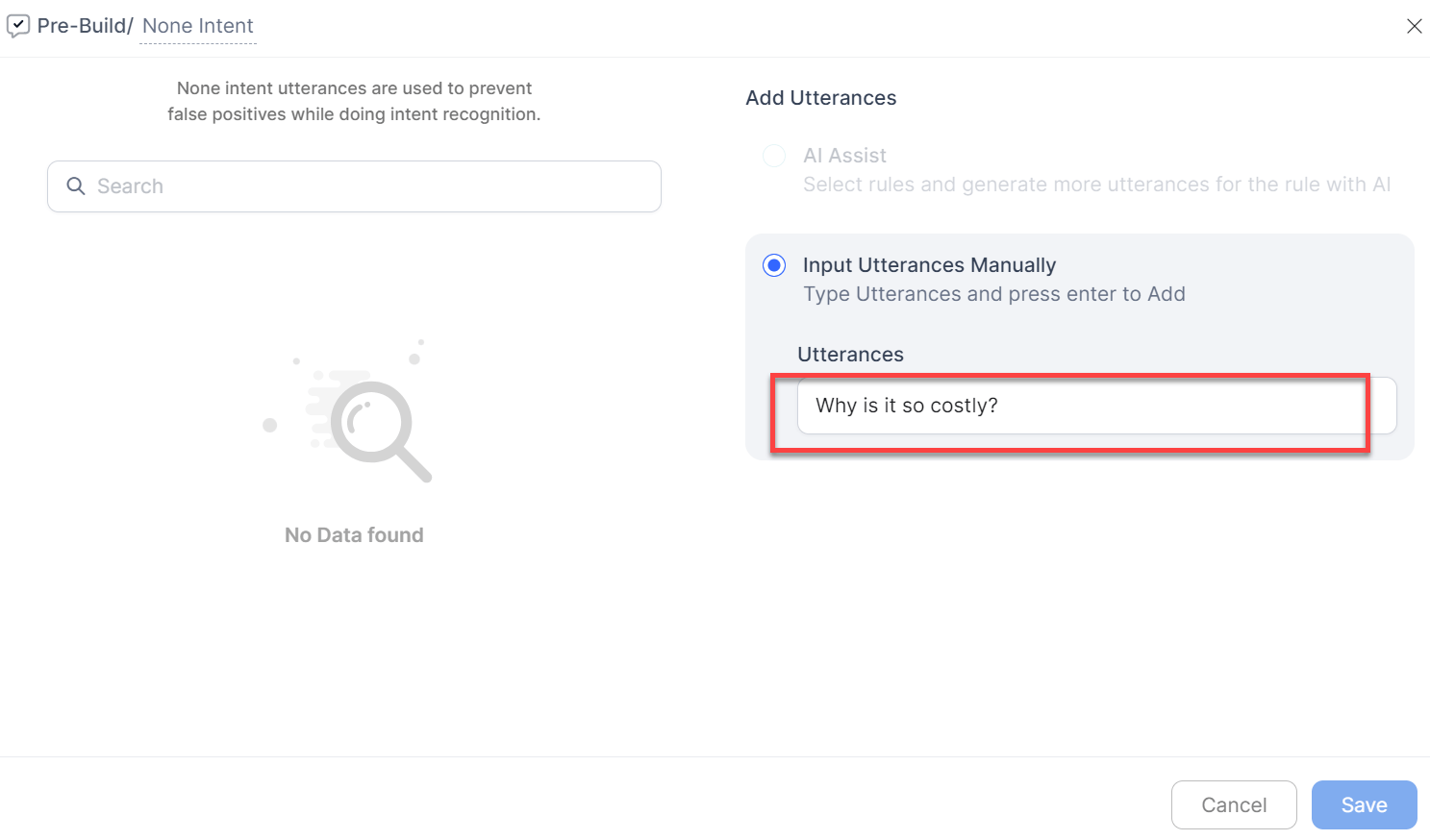
- Repeat for additional utterances, then select Save.
Price Objection
A pre-built rule for handling customer price objections. You can customize conditions and actions, but can’t rename or delete it. You can disable it.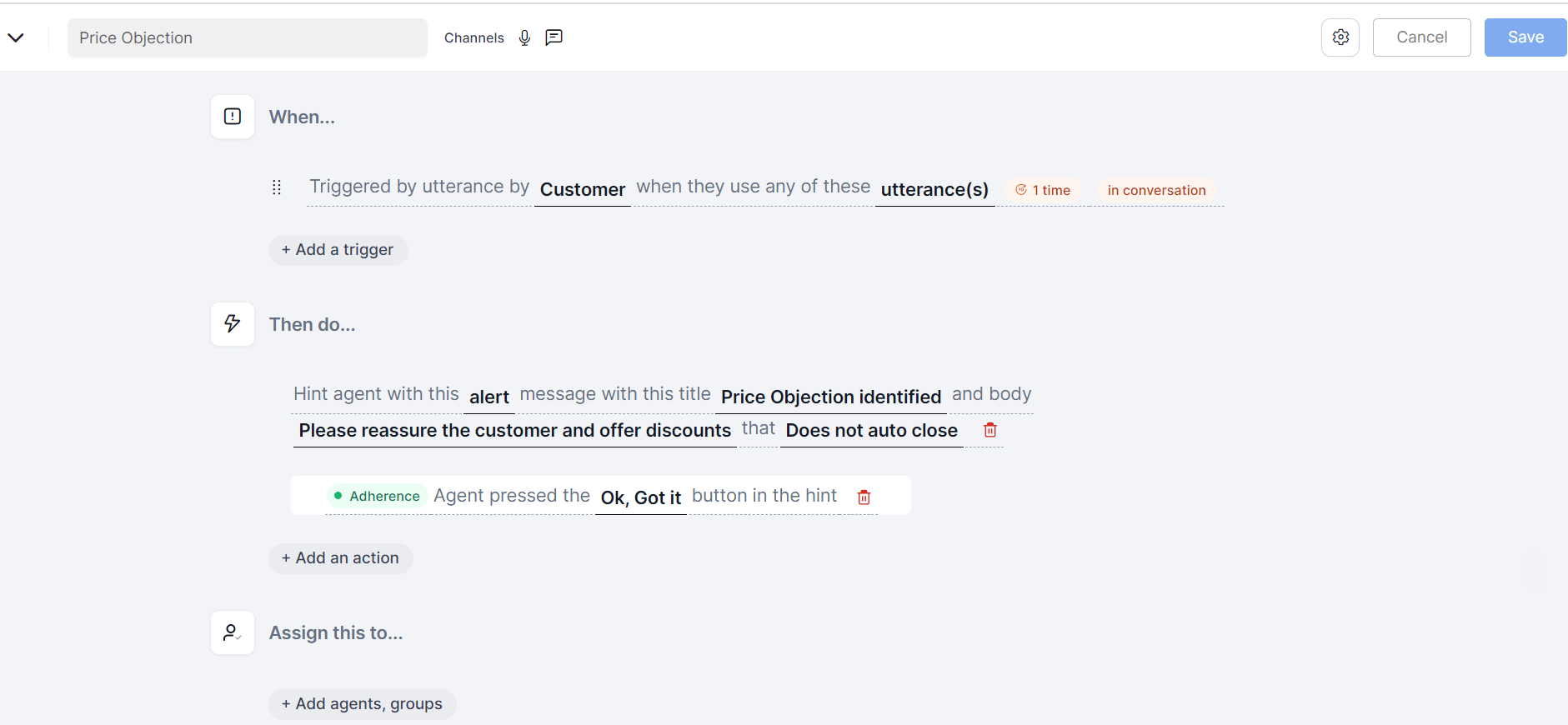
Managing Rules
Create a Rule
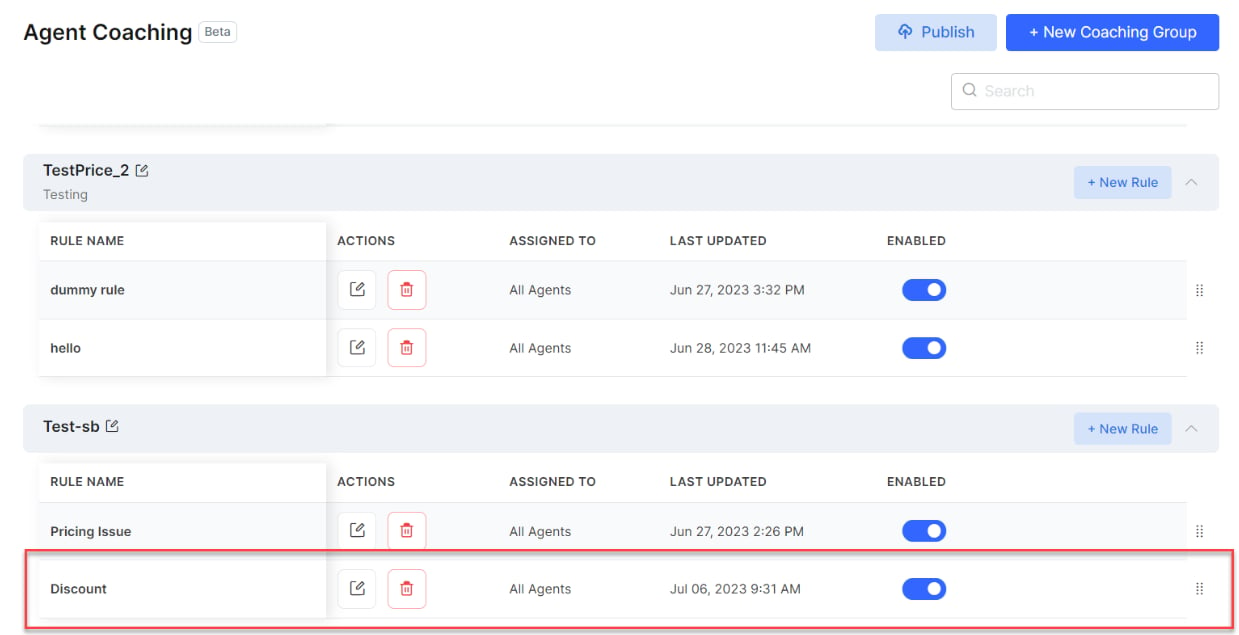
- Go to AgentAssist > Experience > Agent Coaching.
- Select + New Rule.
-
Fill in the rule details:
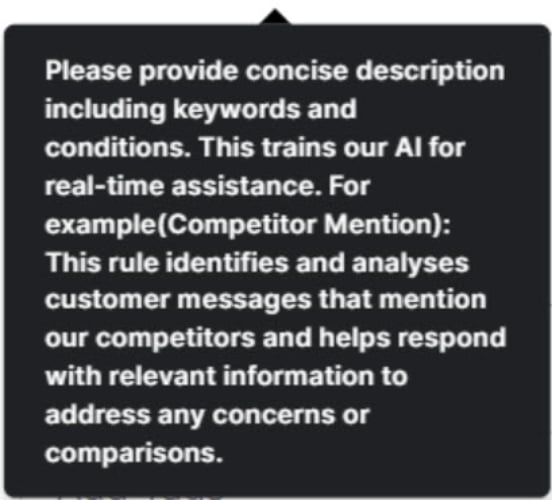
-
Select Apply.
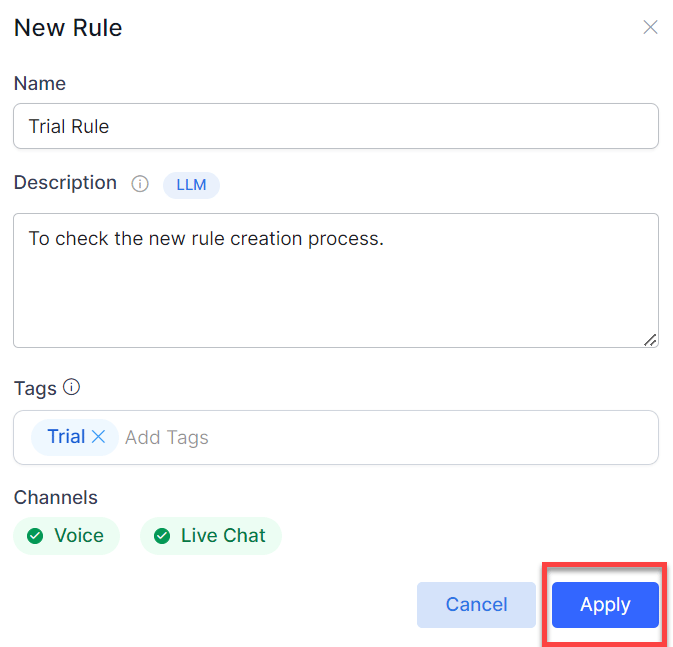
- Select + Add a trigger to define when the rule fires. See Triggers.
- Select + Add an action to define what happens. See Actions.
- Select + Add agents, groups to assign the rule. See Assign Rules.
- Select Save.
Edit a Rule
- Go to AgentAssist > Experience > Agent Coaching.
- Search for the rule by name or browse the list.
- Select Edit on the rule.
Rules lock during editing — only one user can edit a rule at a time. If a rule is left idle for 15 minutes or the user leaves the screen, the lock releases automatically.
Delete a Rule
- Go to AgentAssist > Experience > Agent Coaching.
- Select Delete on the rule.
- Confirm by selecting Yes.
Enable or Disable a Rule
Go to AgentAssist > Experience > Agent Coaching and use the Enabled toggle on any rule. A confirmation message appears.Triggers
Triggers define when a rule fires. Every rule requires at least one trigger. Three trigger types are available.Utterance Triggers
Fire when a customer or agent says something matching the configured utterances. To set up an Utterance Trigger:-
In the rule, select + Add a trigger > Utterance.
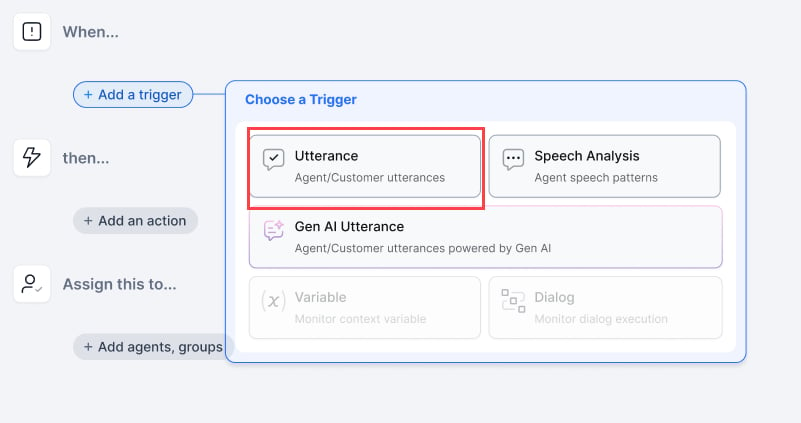
- Select {select person} and choose Agent or Customer.
- Select {set utterances} and enter an utterance. The AI suggests similar utterances with frequency percentages.
-
Select the utterances to include, then select Add.
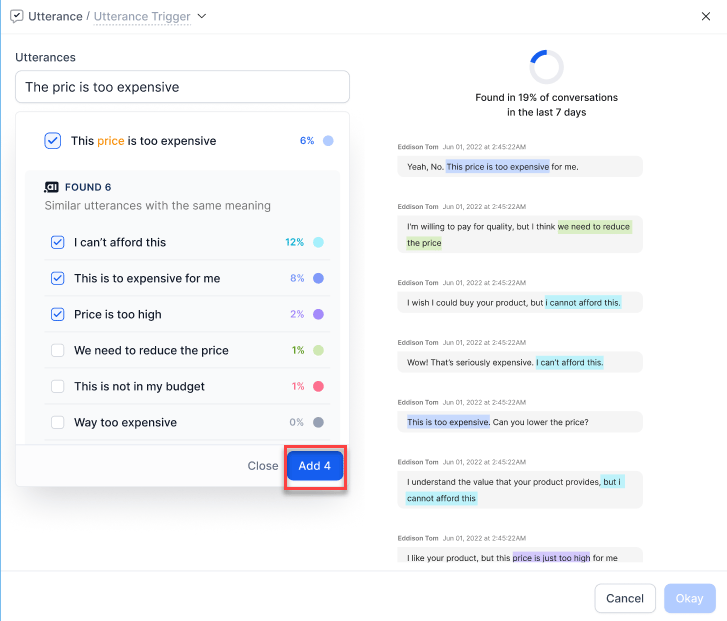
-
Select Okay, then Save.

-
Set the frequency (how many times the utterance must occur).
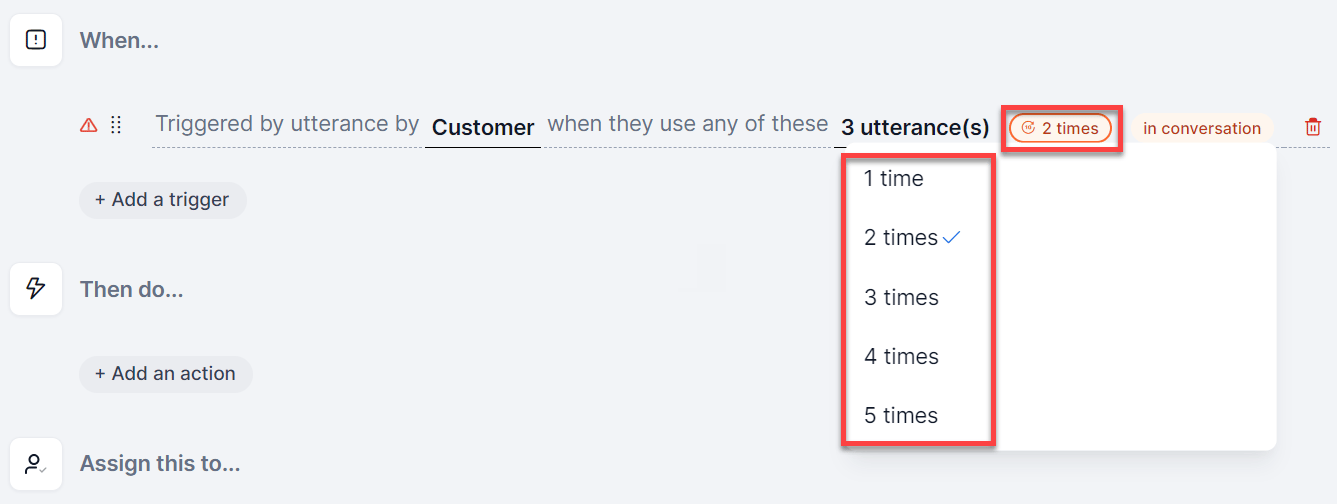
-
Set the time frame:
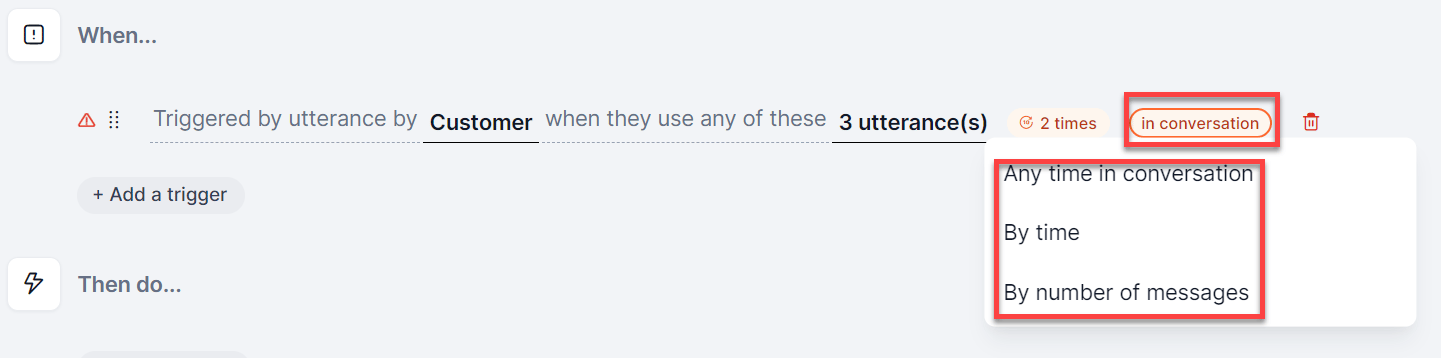
- Press Enter to save.
Speech Analysis Triggers
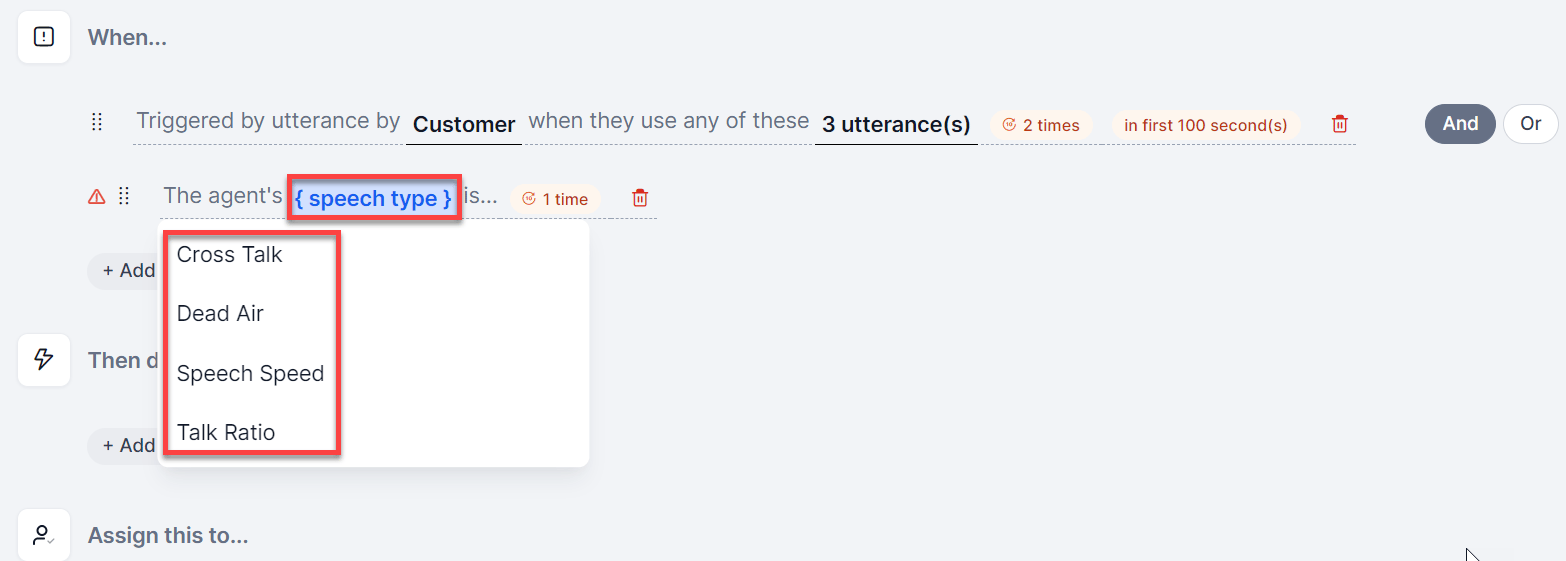
Fire based on speech patterns such as cross talk, dead air, speaking speed, or talk ratio. To set up a Speech Analysis Trigger:- Select + Add a trigger > Speech Analysis.
-
Select {speech type} and choose a type.
Cross Talk configuration:
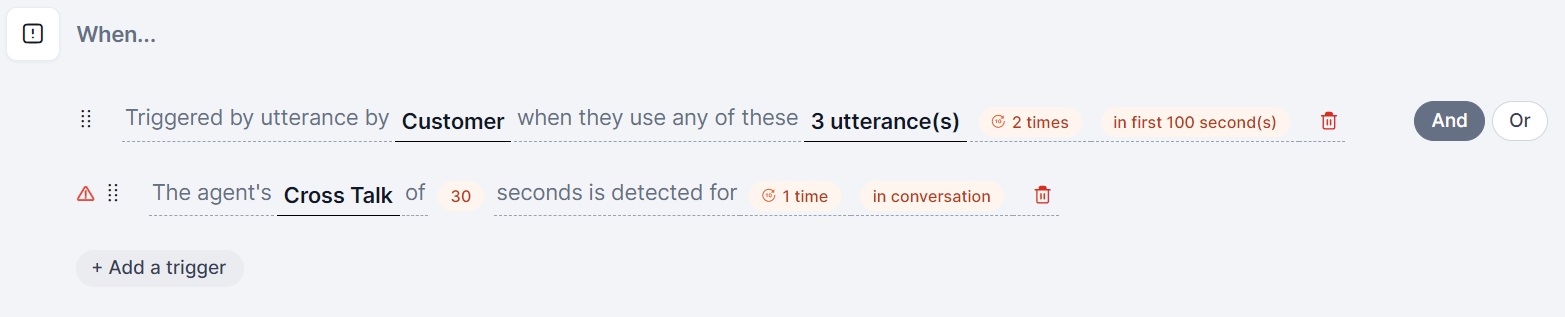

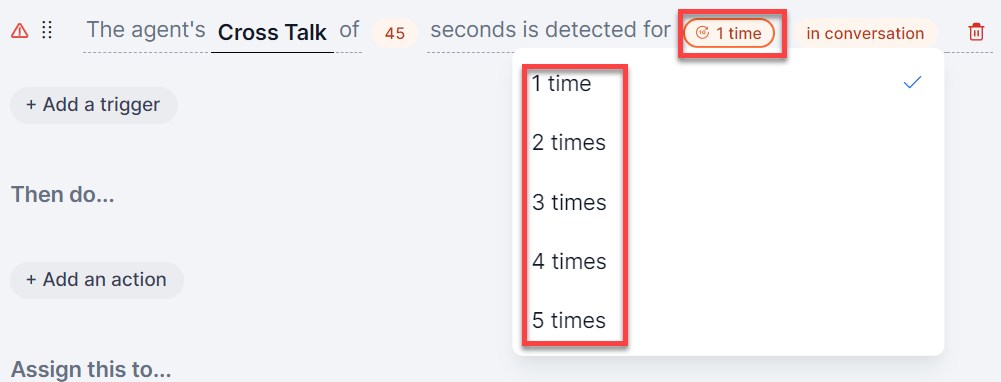




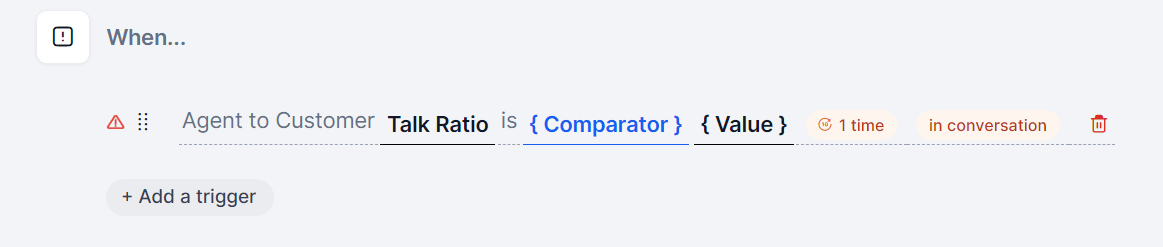
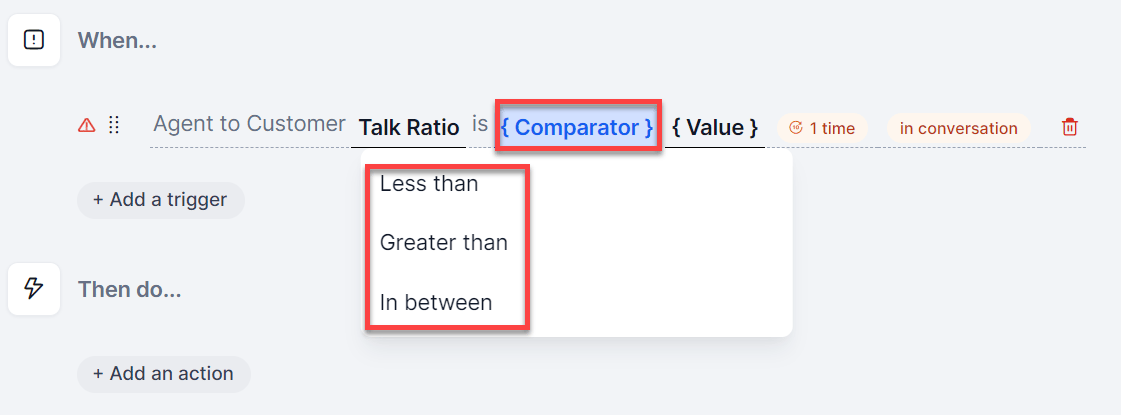
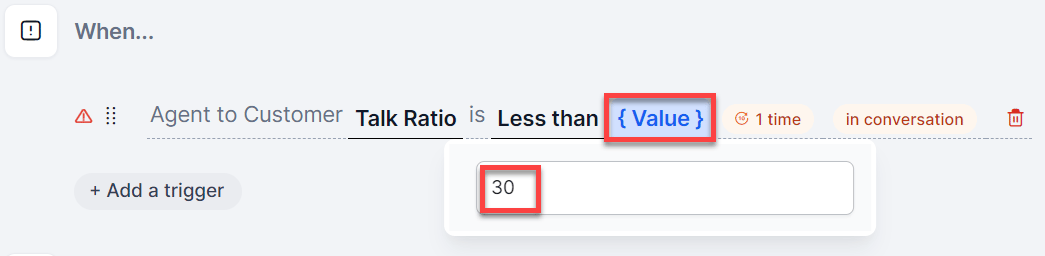
A validation error appears if the configured duration is shorter than the selected conversation time period, or if the trigger setup is incomplete.
Gen AI Utterances
Uses AI-powered prompts to analyze real-time conversations. When an utterance matches the configured prompt, the rule fires. To set up a Gen AI Utterance trigger:- Select + Add a trigger > Gen AI Utterances.
- Select {select person} and choose Agent or Customer.
-
Select {set prompt} and enter a prompt in the Enter Prompt box.
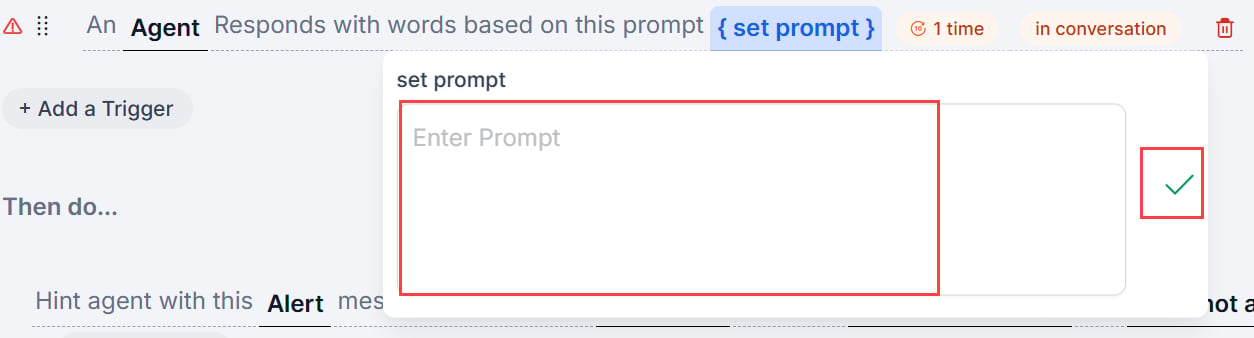
- Select the tick mark to save.
- Set the frequency and time frame.
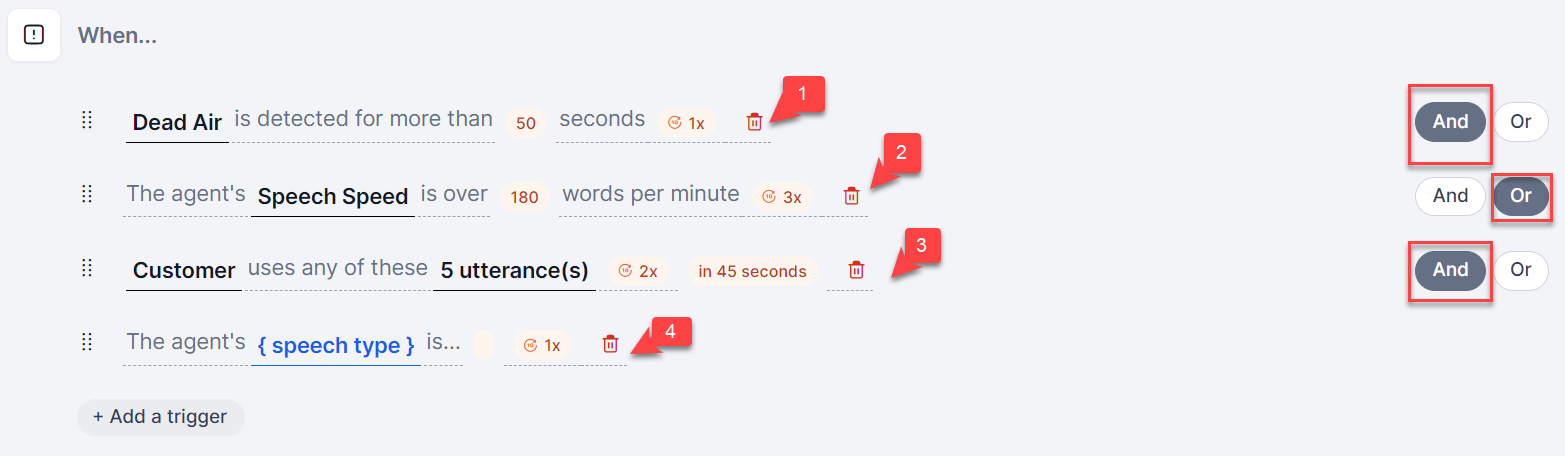
Combining Triggers (And/Or)
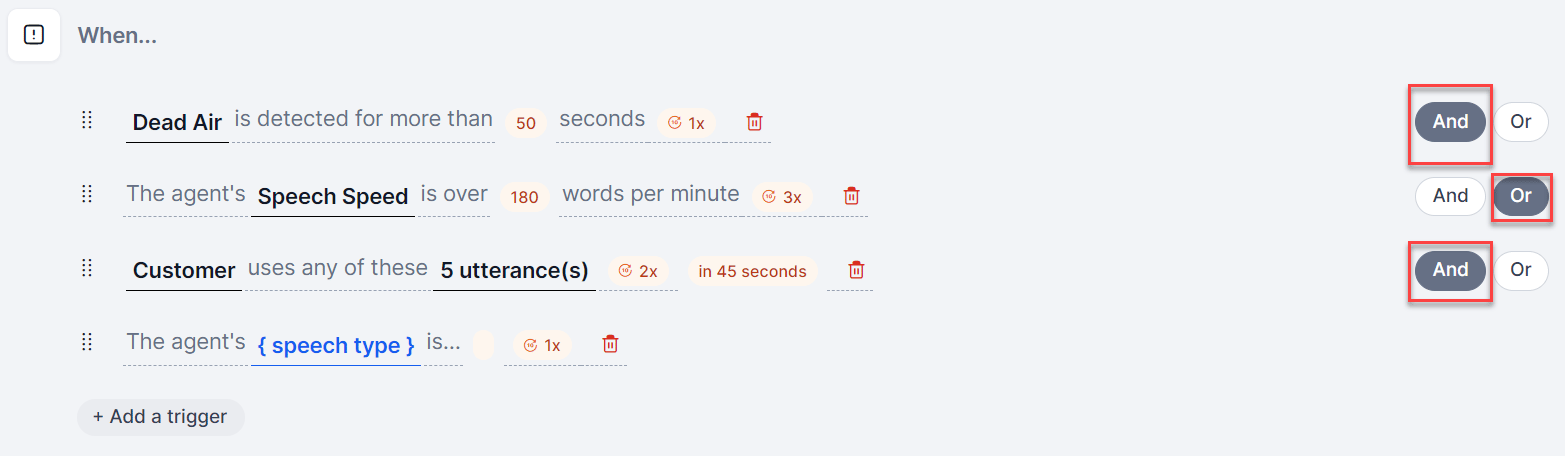
You can combine multiple triggers on a single rule using the And or Or logic.- Select + Add a trigger to add a second trigger.
-
Choose And or Or.
Actions
Actions define what happens when a trigger fires. Three action types are available: Nudge Agent, Hint Agent, and Email Manager. Nudge and Hint actions support adherence tracking.Adherence
Adherence tracks whether an agent follows through on a coaching instruction. You can set it up for Nudge and Hint actions.Nudge Agent
Short, disappearing messages that pop up on the agent’s screen and may or may not auto-close, depending on configuration. These messages compliment or redirect agents mid-conversation. Nudge types: Positive, Neutral, Alert, Critical. To set up a Nudge Agent action:-
Select + Add an action > Nudge Agent.
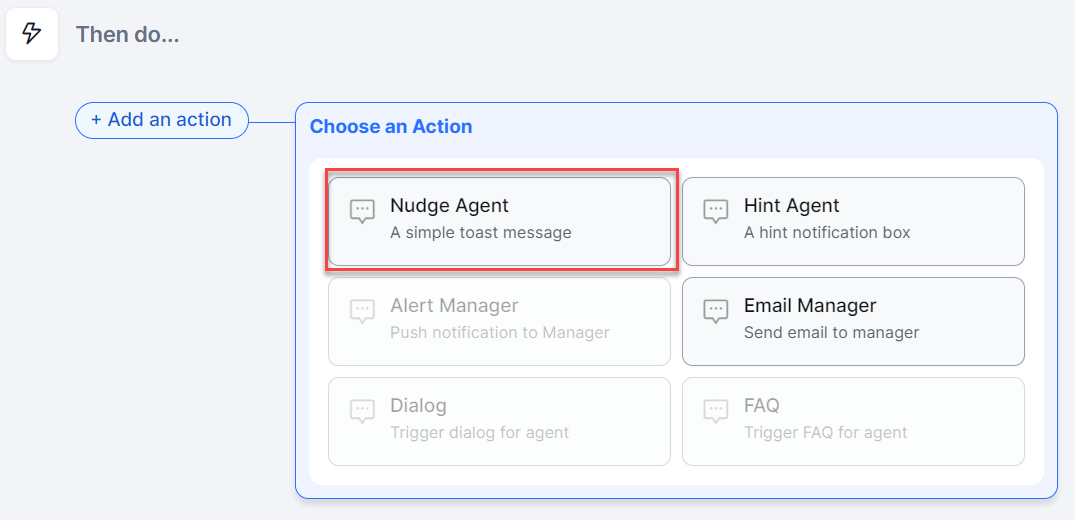
- Select {Choose} and pick a nudge type (Positive, Neutral, Alert, Critical).
-
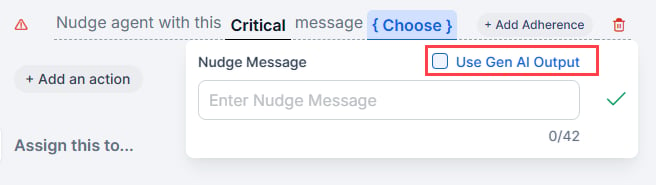
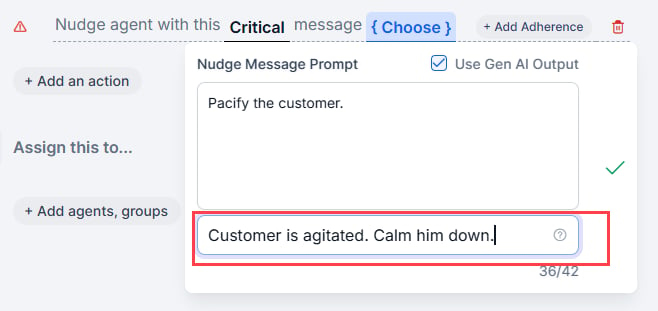
Select {Choose} and enter the nudge message. Optionally select Use Gen AI Output to generate the message from a prompt, and add a fallback message.
- Select the tick mark to save.
-
Set the display option:
- Optionally, select + Add Adherence and choose Acknowledge Pressed or Utterance.
 Neutral:
  Alert:
  Critical:
Hint Agent
Pop-up messages that advise agents to take action. May or may not auto-close, depending on configuration. Hint types: Positive, Neutral, Warning, Critical. To set up a Hint Agent action:-
Select + Add an action > Hint Agent.
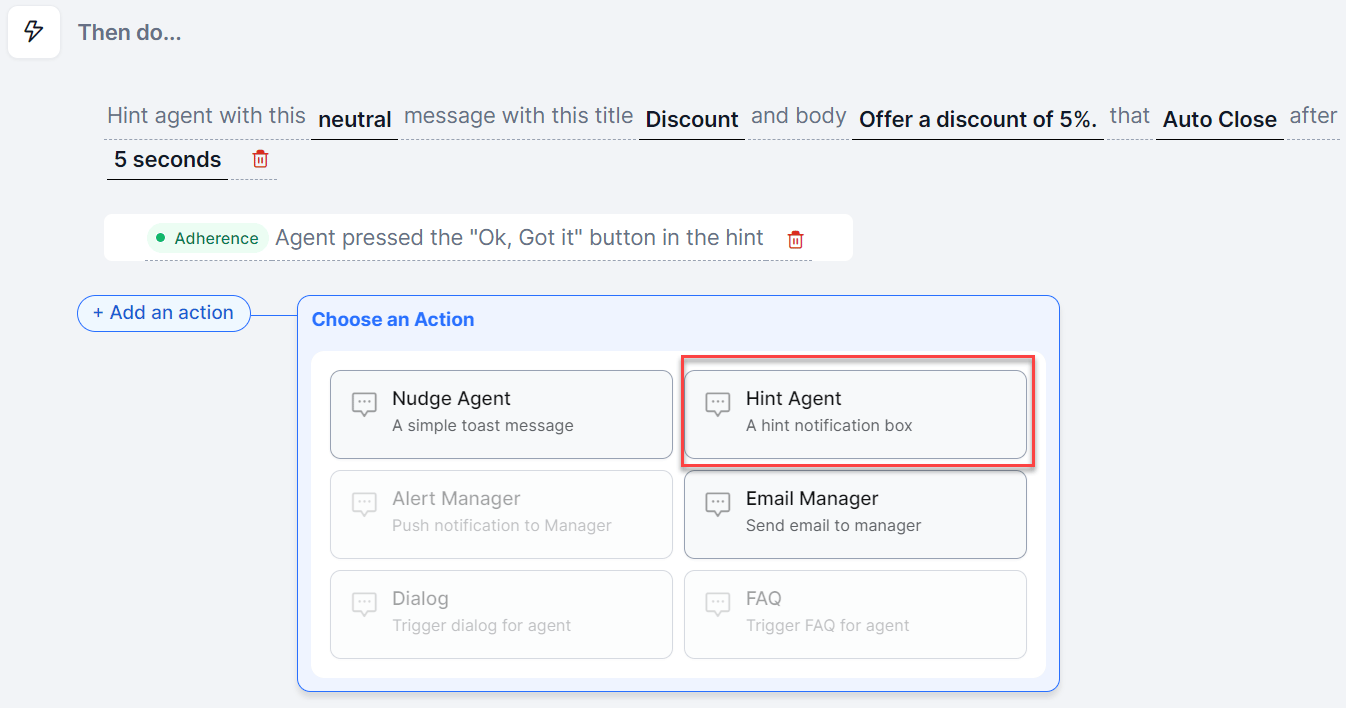
-
Select {Choose} and pick a hint type.
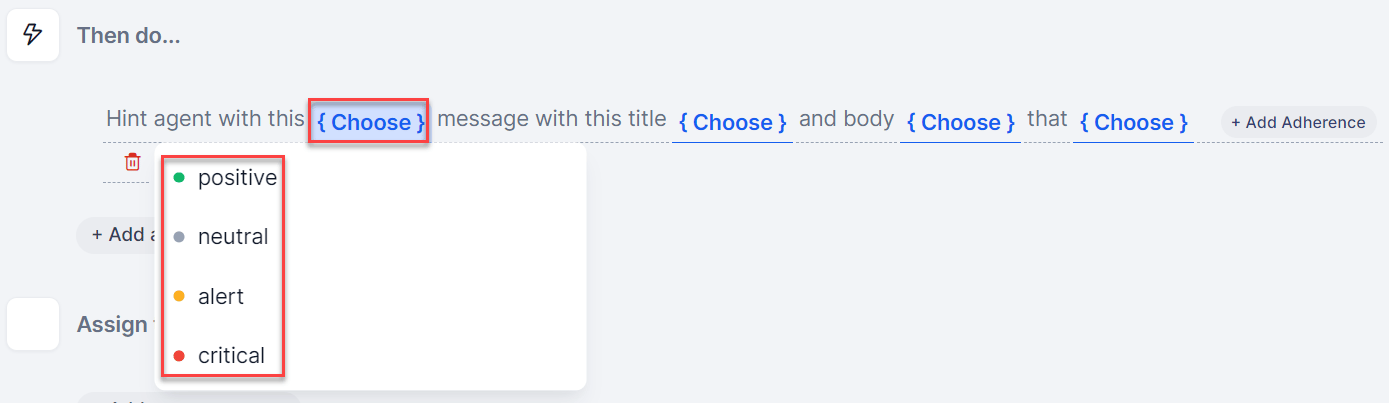
-
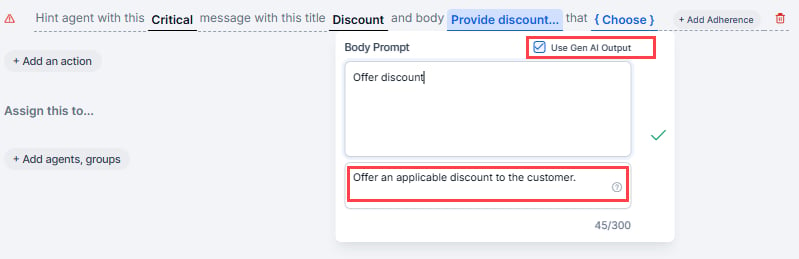
Enter a title. Optionally use Gen AI Output to generate the title from a prompt, with a fallback (up to 42 characters).
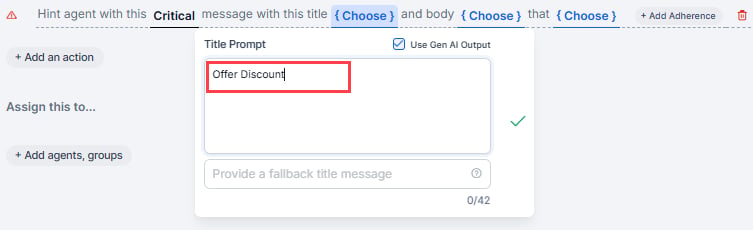
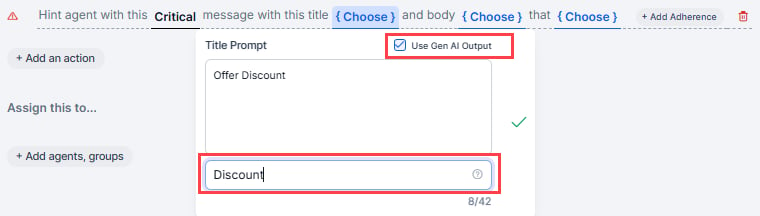
-
Enter a message body. Optionally use Gen AI Output with a fallback (up to 300 characters).
-
Set the display option:

-
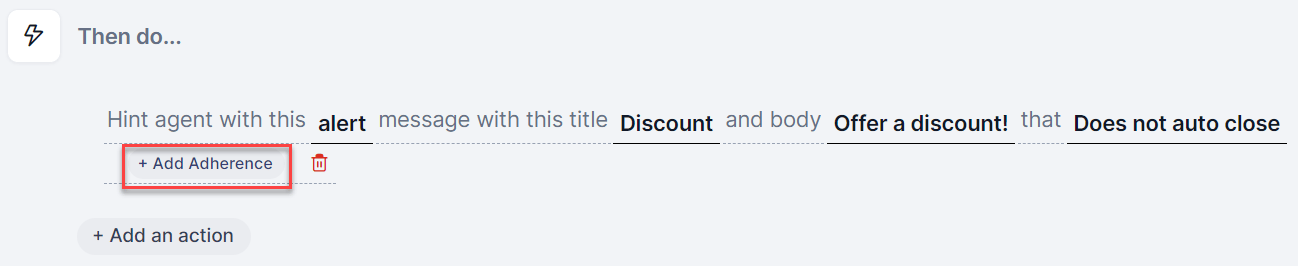
Optionally select + Add Adherence and choose Acknowledge Pressed or Utterance.
 Neutral:
  Warning:
  Critical:
Email Manager
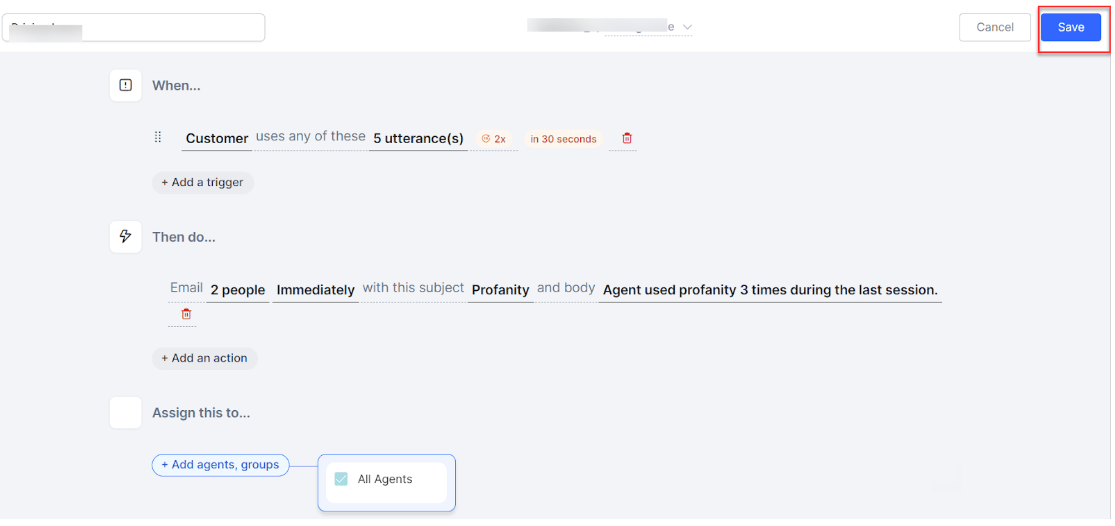
Sends a push notification to a manager’s desktop. Used for situations requiring supervisor awareness (such as repeated cross talk or customer profanity) instead of agent-facing nudges or hints. To set up an Email Manager action:-
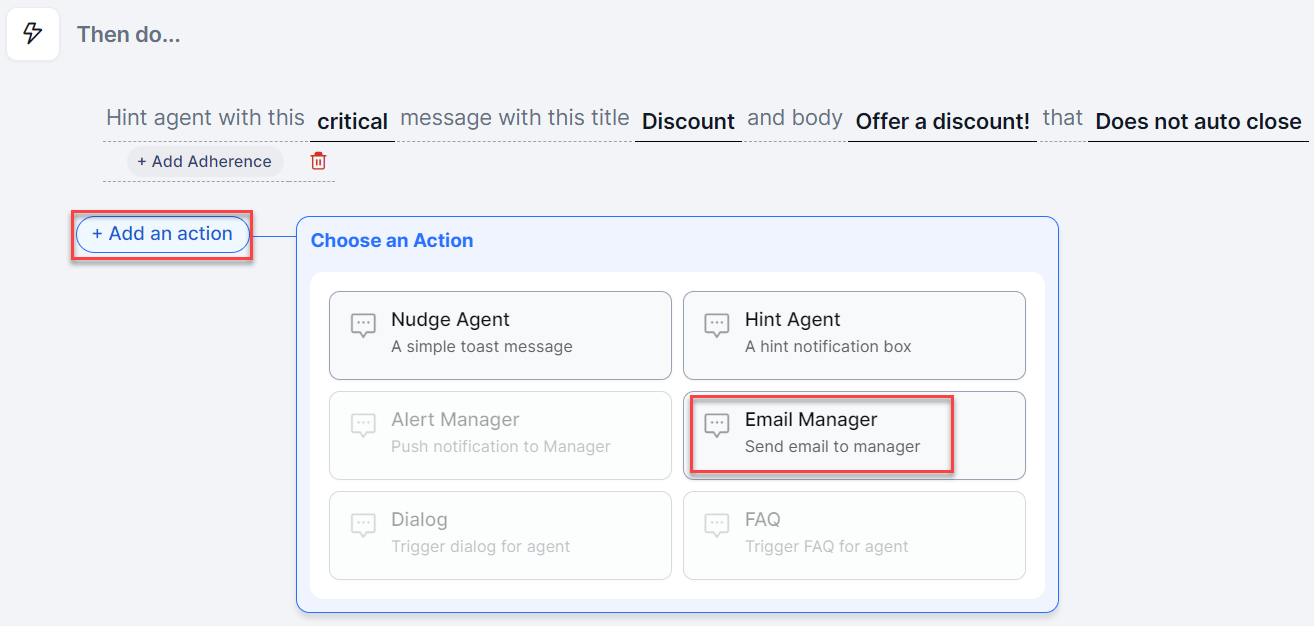
Select + Add an action > Email Manager.
-
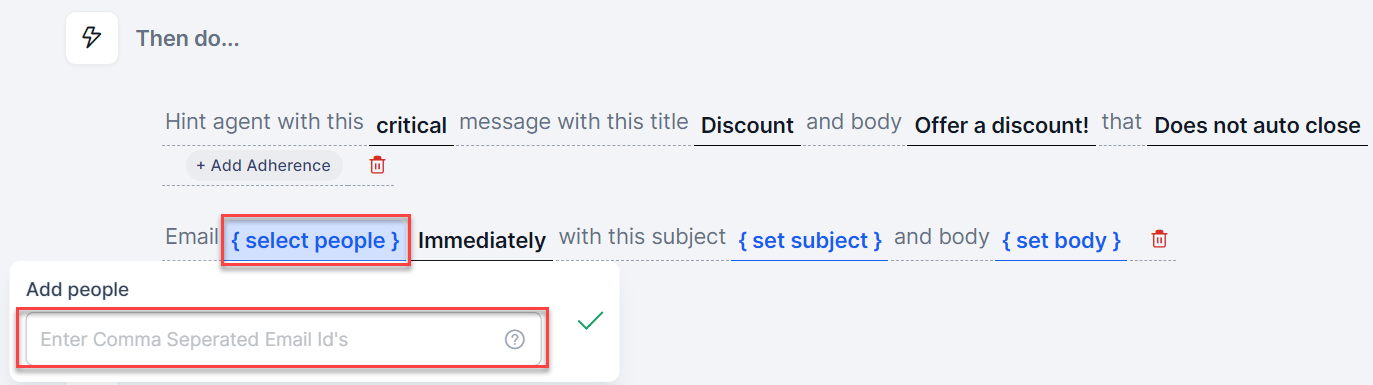
Select {select people} and enter one or more manager email addresses (comma-separated).
- Select the tick mark to save.
-
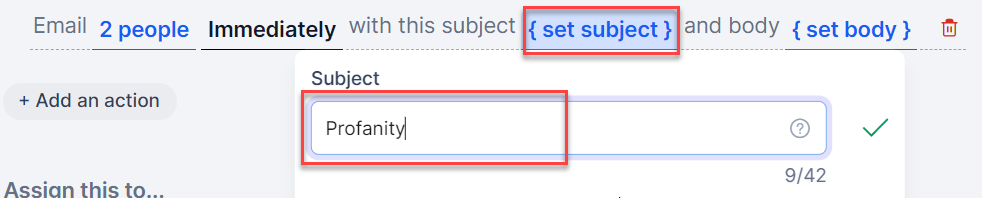
Select {set subject} and enter a notification subject.
-
Select {set body} and enter the notification content.
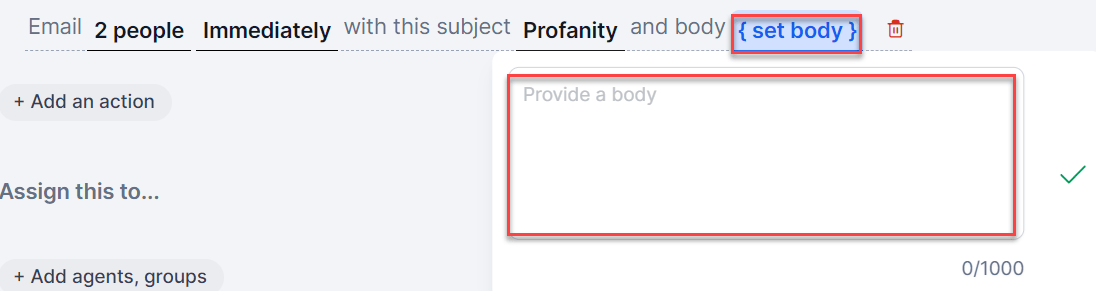
- Select the tick mark to save.
Assign Rules
Rules are assigned to All Agents by default. You can narrow assignment to specific agents or groups.-
In the rule, select + Add agents, groups under Assign this to….
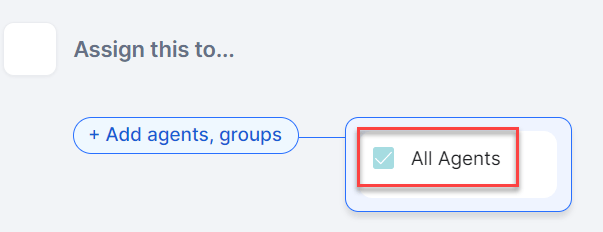
- Select the agents or groups.
-
Select Save.