

Test in Talk to Bot
After completing Adapter Configuration and enabling the Dialogflow API:- Open your app and click Test.
- Enter a user utterance that matches an intent configured in Dialogflow Essentials.
- In the Debug Log panel, confirm the message: intent identified using External NLU is initiated.
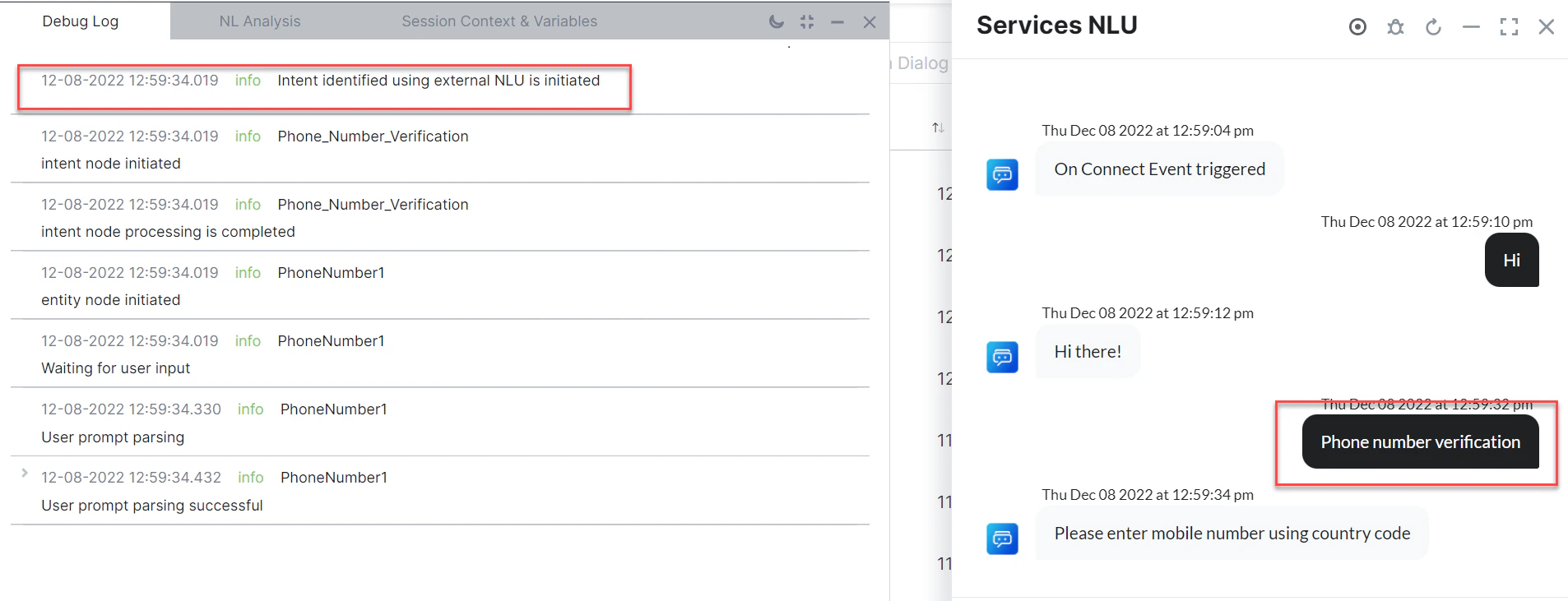
Debug Log
The Debug Log shows whether intent was detected by External NLU before the Intent node initiated entry. If the API call fails, an error response appears in the log.-
Intent detected by the external NLU engine is always marked as a Definitive Match.
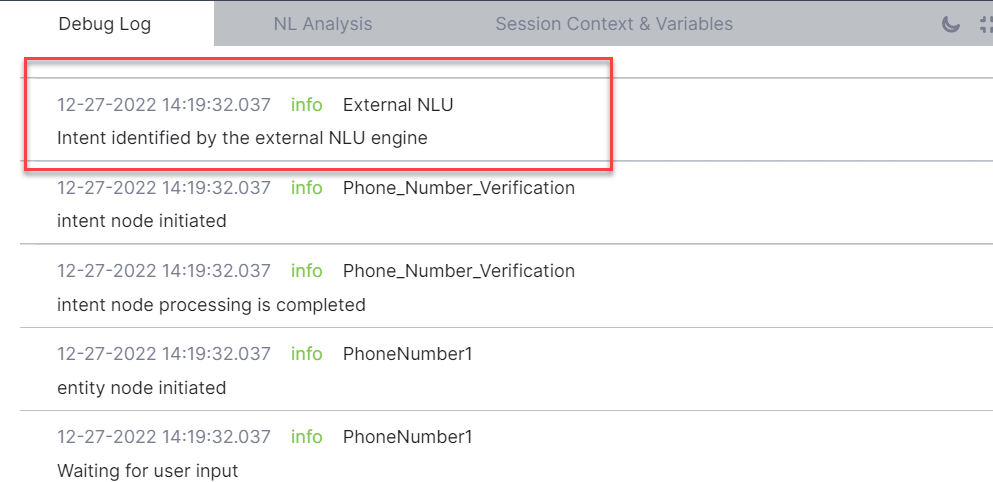
- If intent isn’t detected by External NLU, this is also tracked in the Debug Log.
-
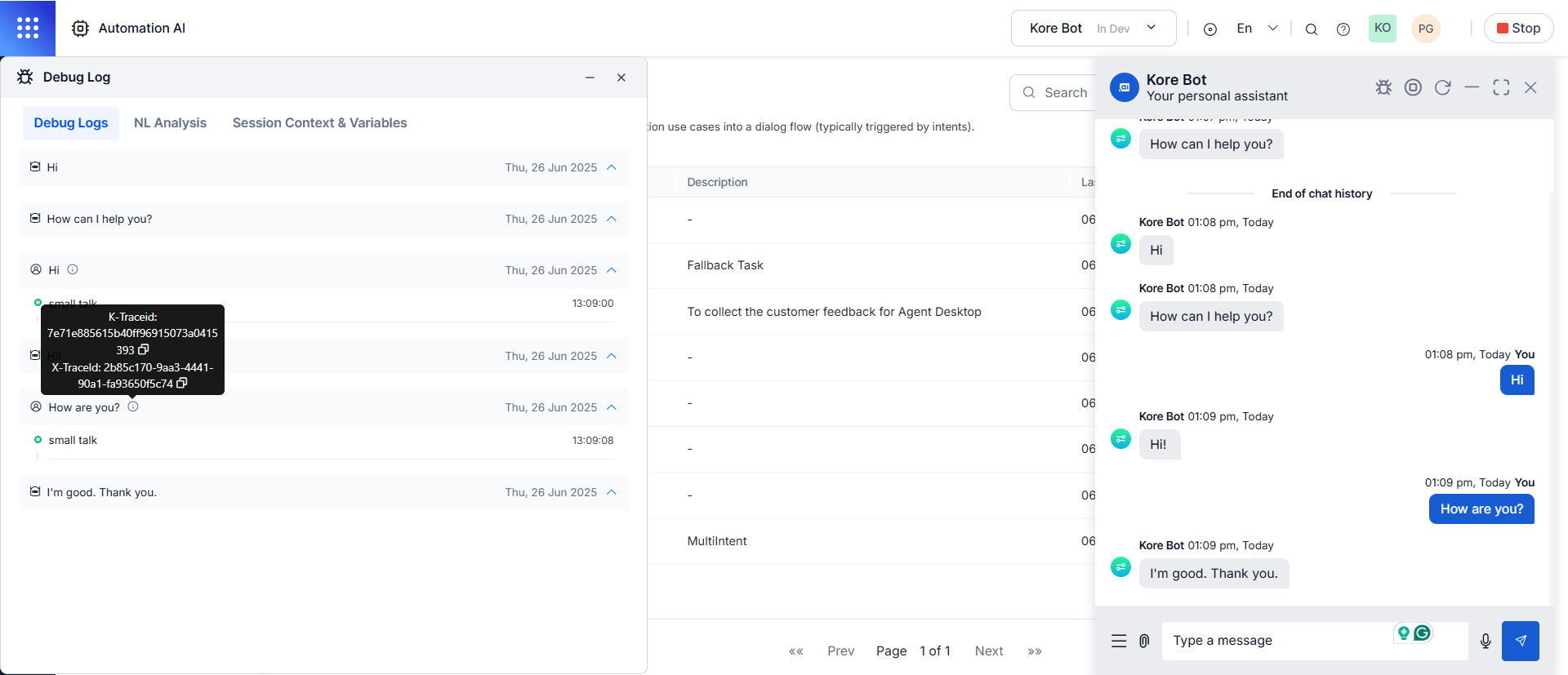
Hover over the information icon to view the K-Traceid and X-Traceid for each interaction. K-Traceid tracks and debugs platform activities; X-Traceid is a unique per-message identifier included in platform logs.
-
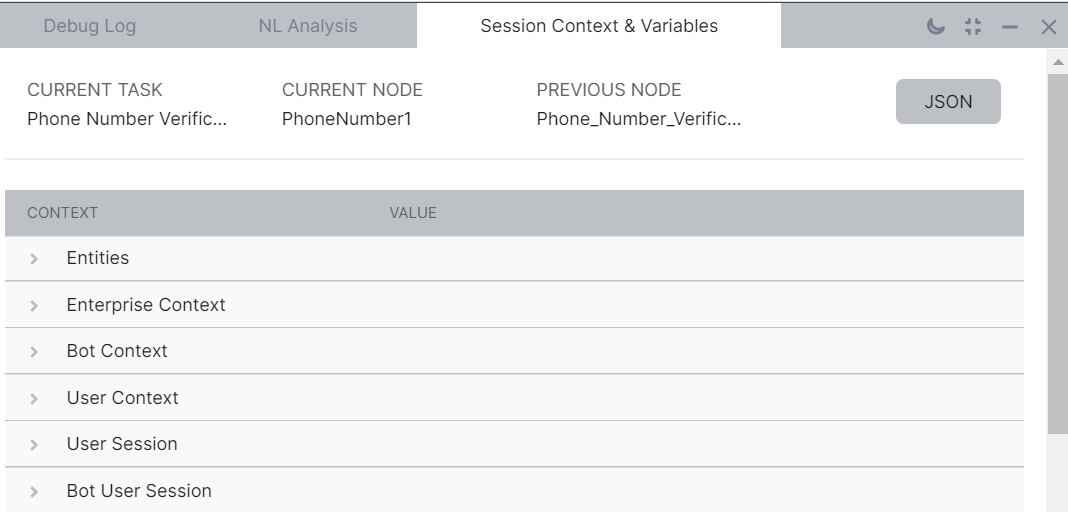
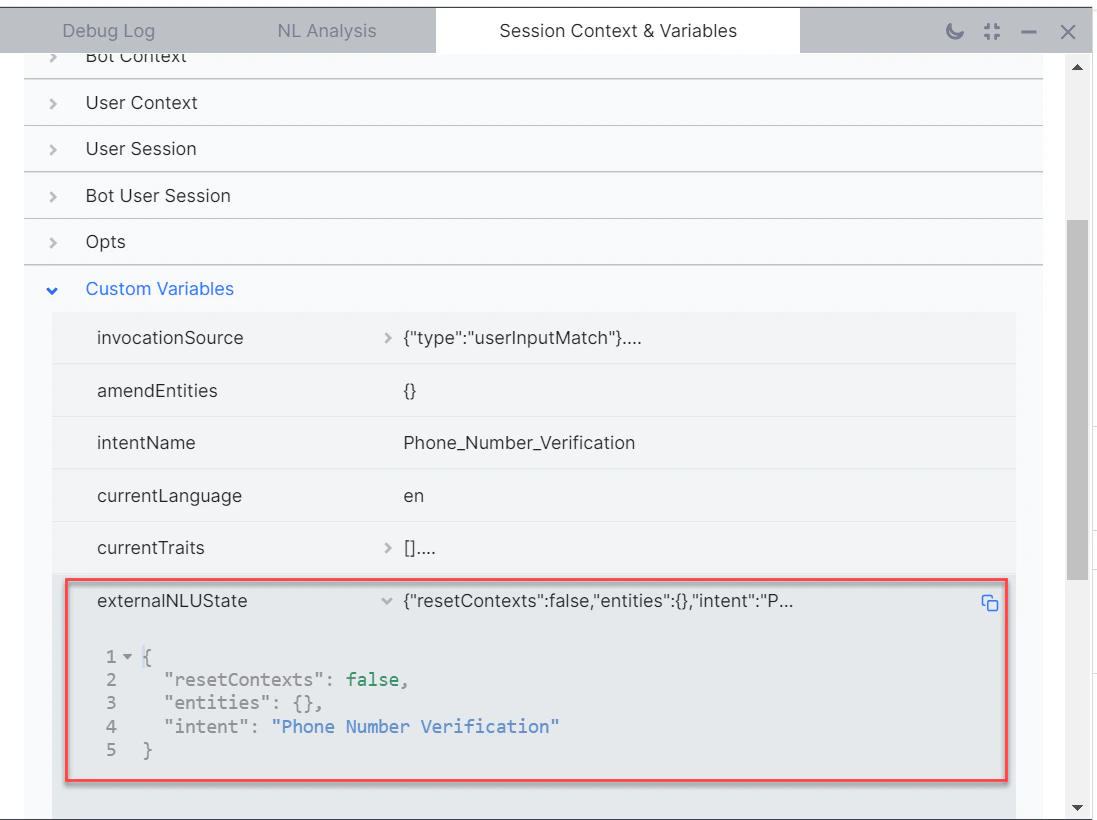
Under Session Context & Variables, inspect intent and entity variables in detail.
Utterance Testing
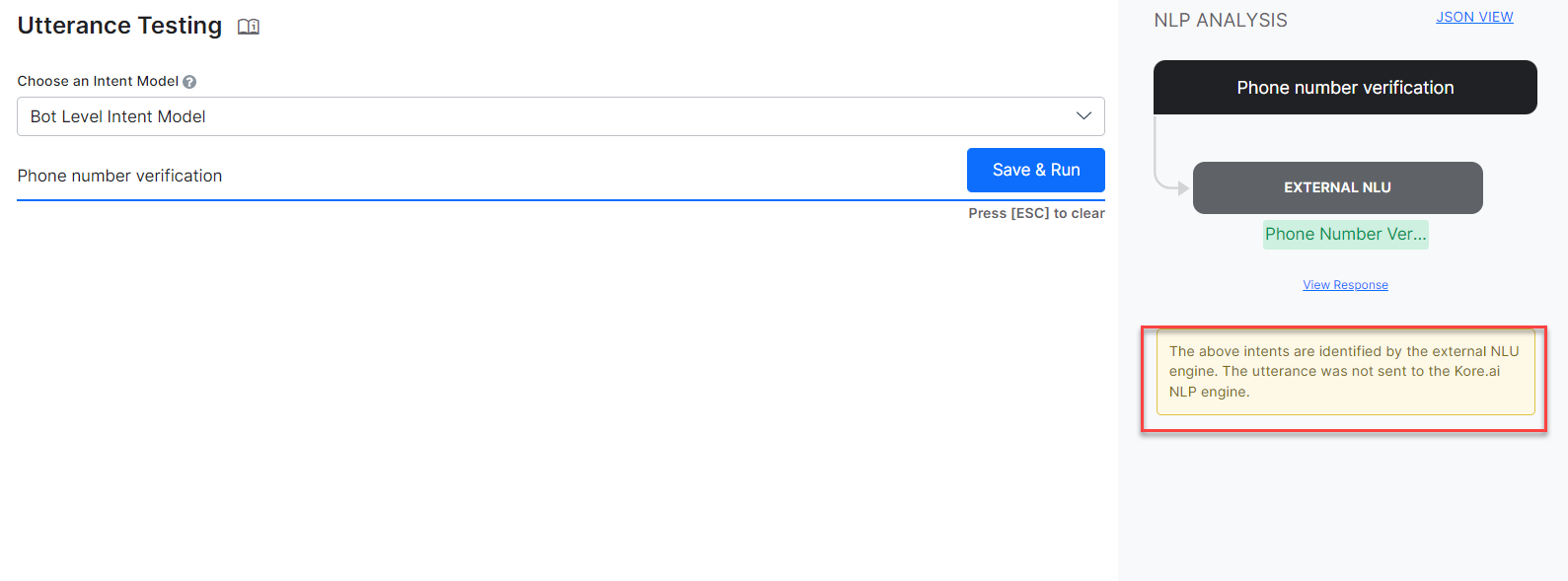
Utterance Testing provides NLP Analysis for individual utterances. When intent is detected by an external engine, the utterance isn’t sent to the Platform NLP engine, and the Matched Intents and Fields/Entities tables aren’t shown.-
Intent detected by external engine:
-
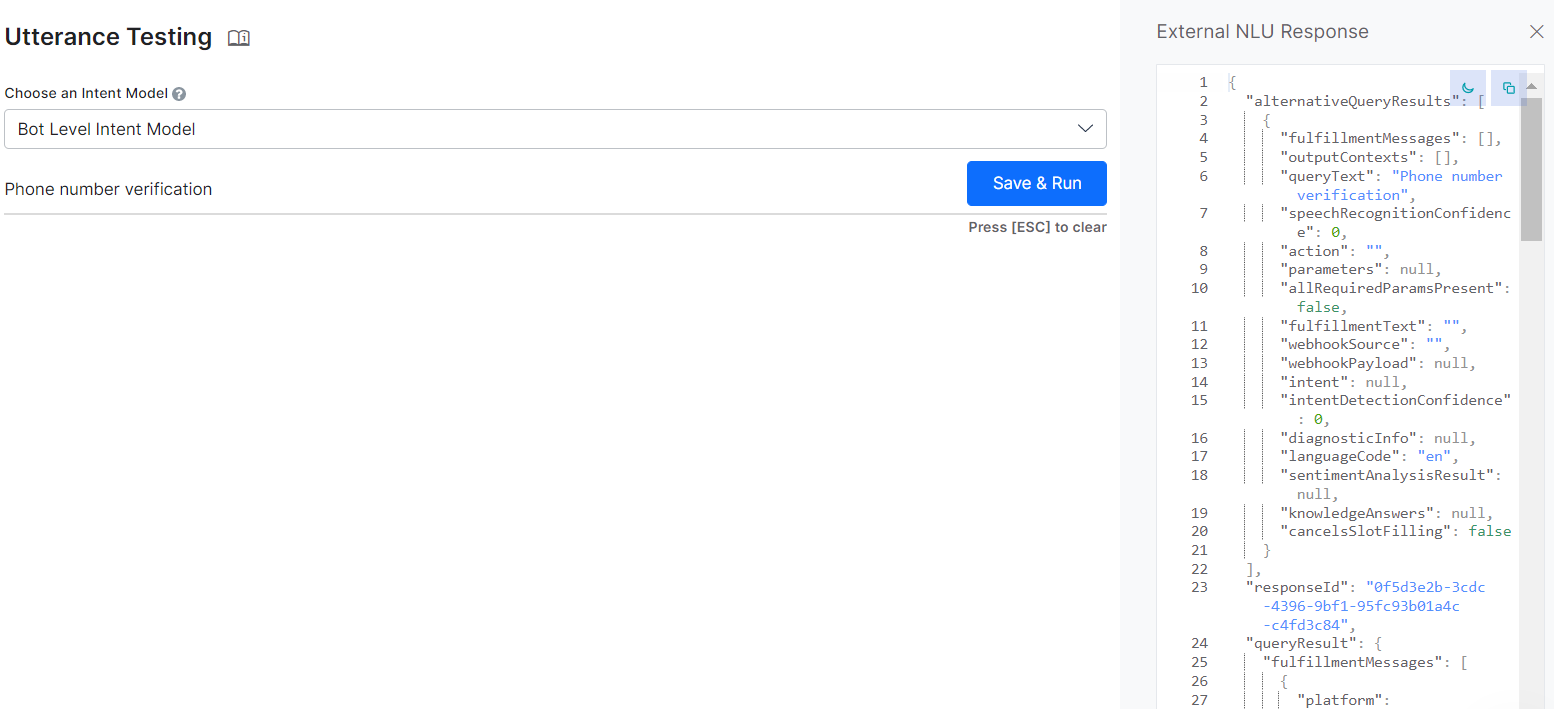
Click View Response to see the raw API response from the external NLU engine (available whether or not intent was detected).
-
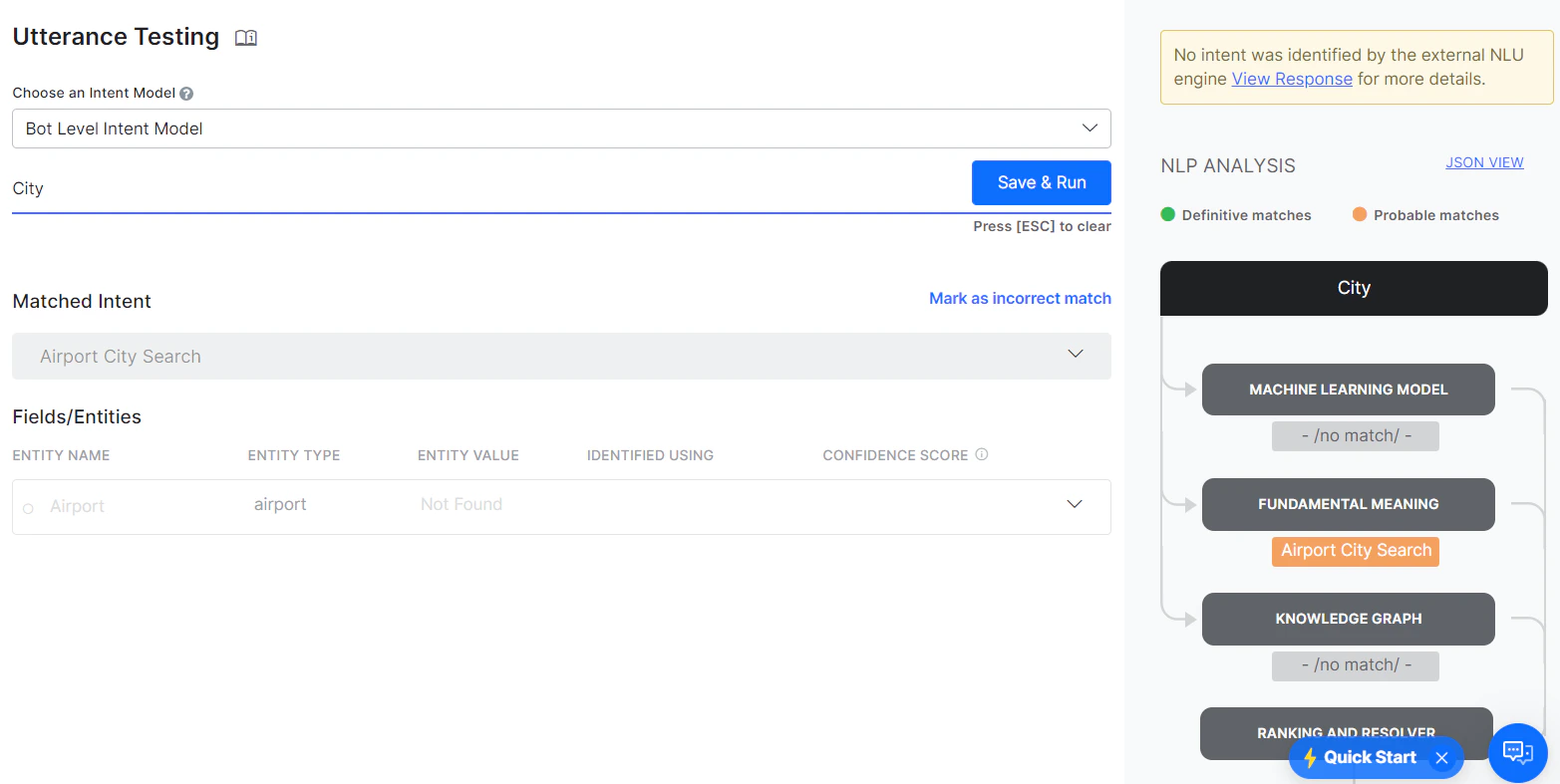
Intent not detected by external engine — Platform NLU acts as fallback. NLP analysis shows results from all three Platform engines plus ranking and resolver. See Ranking and Resolver.
-
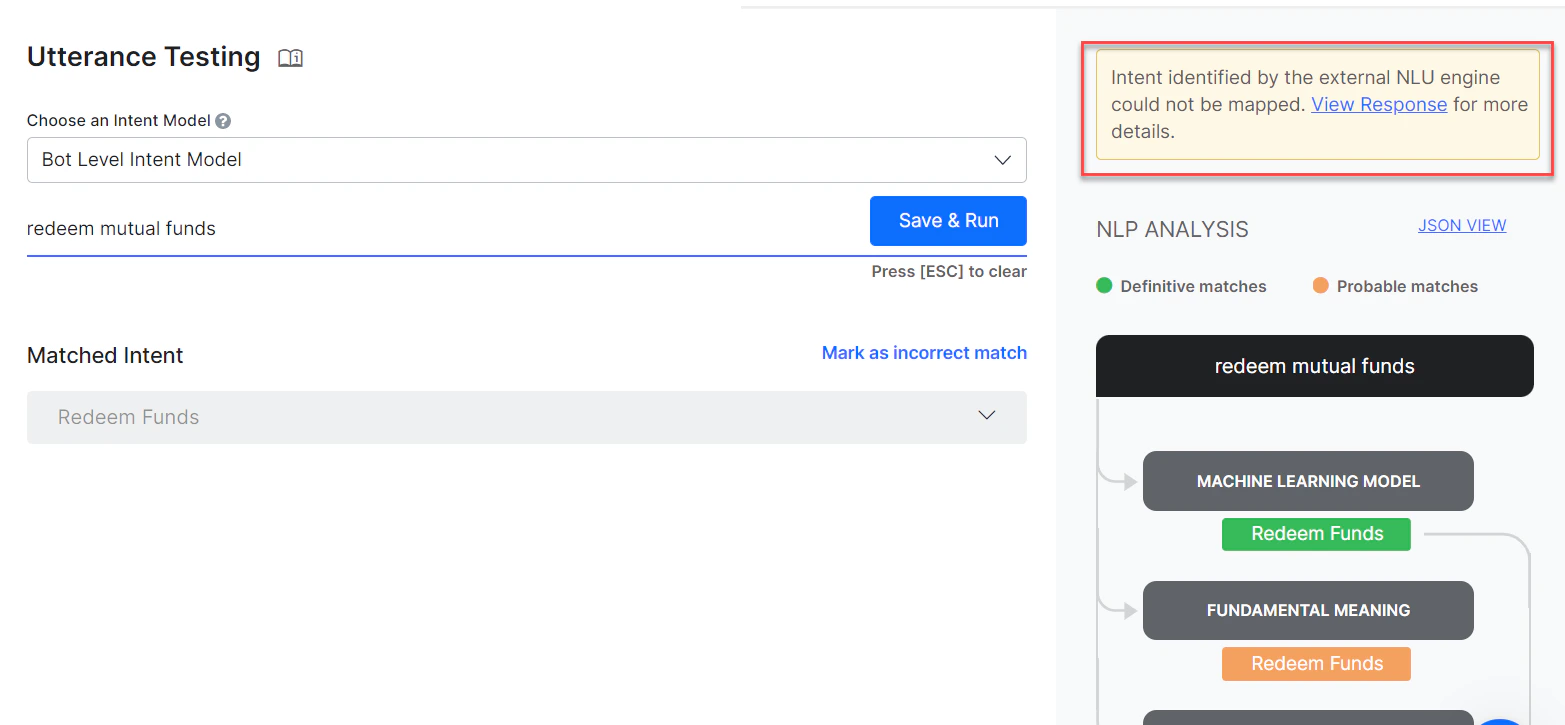
Intent detected but not mappable — Platform NLU acts as fallback. NLP analysis displays a message with the API response containing detected intents and parameters.
Batch Testing
Test results (TP, FP, TN, FN) are based on the combined outcome of External NLU and Platform NLU:External NLU scores aren’t included in comparisons — there is no common scoring baseline across engines.
ExtNLU (no score) instead of ML, FM, or KG scores.

Health and Monitoring
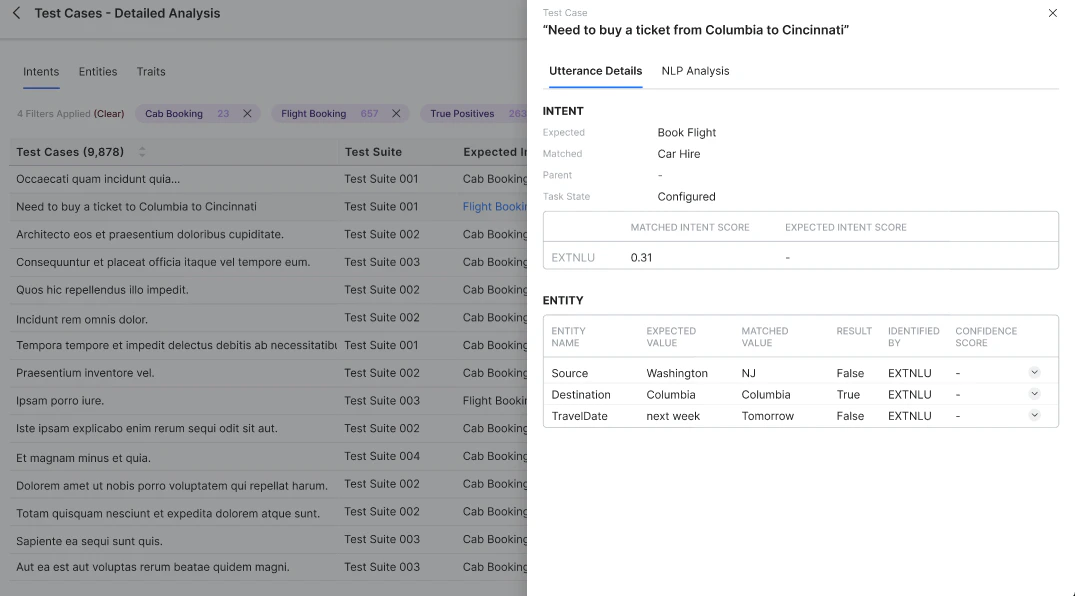
Go to Test Cases > Detailed Analysis to see intents and entities identified by External NLU (displayed without scores). The Traits engine operates independently of external NLU.When external NLU is enabled, some Health and Monitoring recommendations may not apply — recommendations are based on training data in the Platform, not the external engine.
NLP Insights
NLP Insights captures intent identified and not-identified utterances with their NLP analysis. Failed External NLU API call details appear in the debug logs of NLP Insights.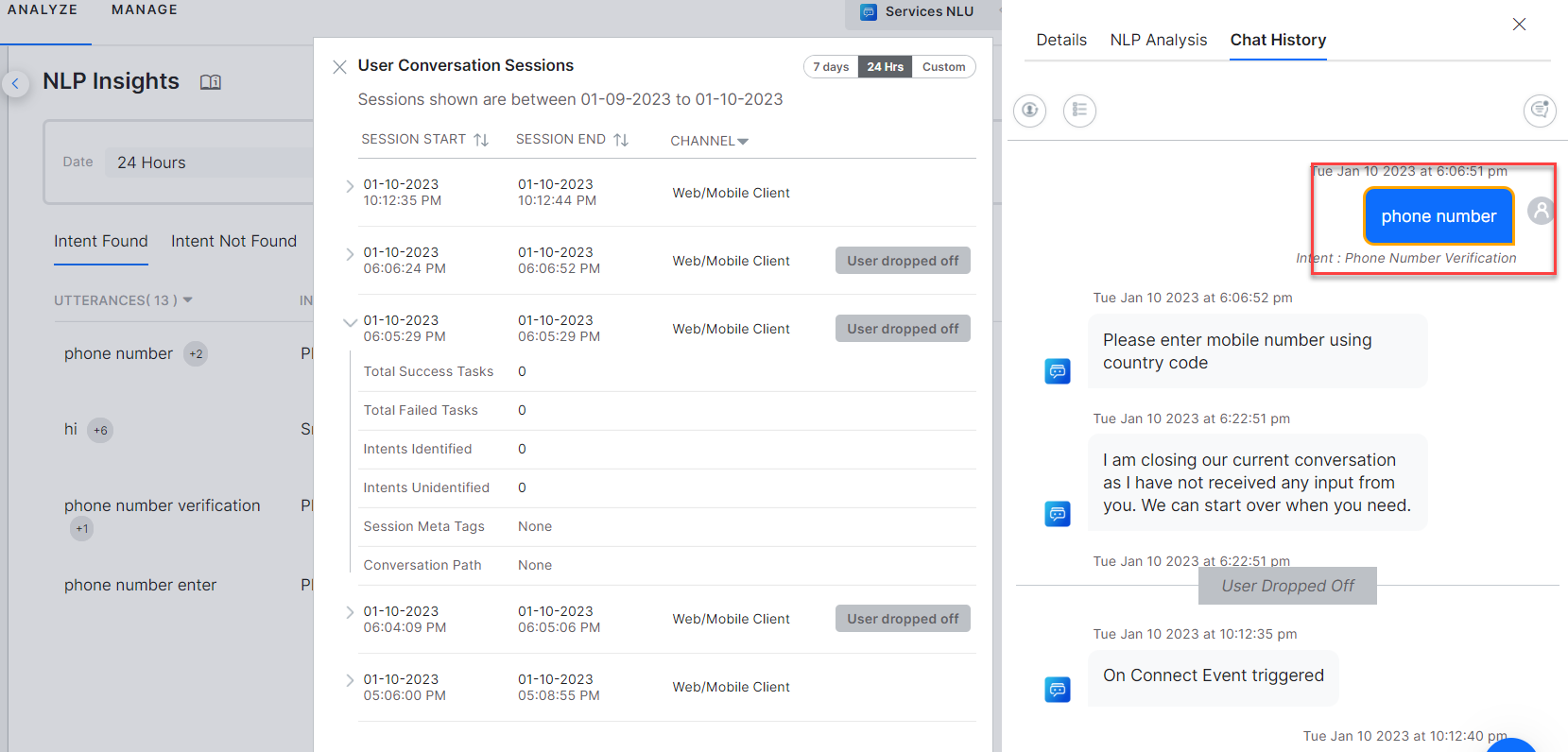
Conversation Behavior
The platform handles all other conversation behaviors, including:
- Re-prompts, error prompts, message responses, widgets
- Channel support and channel-specific customizations
- Authorization for service calls, alerts, small talk
- Language detection, sentiment analysis, traits identification
- Sub-intent and follow-up intent scanning decisions
- Interruption handling, entity/intent priority settings
- PII masking/redaction
- Dialog task node execution, context object construction
- Response messages, fulfillment, and logical flows
Response messages and fulfillment data from the external engine are ignored.
Intent and entity mapping uses case-insensitive name comparison between the two platforms.
Follow-up and Sub-Intent Identification
- When all required parameters are available in context, follow-up intent scope activates on External NLU. Once active, utterances are sent to External NLU for intent identification.
- When sub-intent scope is active on the Platform, utterances are sent to External NLU for intent detection along with the parent intent context.